Inside Roulette Play: Systems, Insights, and Developments as of July 2026
Felix Ludwig · Jul 27, 2026
Inside Roulette Play: Systems, Insights, and Developments as of July 2026
Players continue to explore various betting systems on the roulette wheel, and recent industry reports indicate steady interest in both European and American variants through the first half of 2026. European roulette features a single zero while the American version includes both a single and double zero, which creates house edges of 2.7 percent and 5.26 percent respectively according to standard probability calculations used by gaming analysts. Those differences remain central to any discussion of long-term outcomes, since the presence of the extra zero alters payout ratios without changing the fundamental random nature of each spin.
Common Betting Systems in Use
Betting systems such as the Martingale, Fibonacci, and D'Alembert attract attention because they prescribe specific patterns for adjusting wager sizes after wins or losses. The Martingale approach doubles the stake after every loss in an attempt to recover previous amounts with a single win, yet table maximum limits and finite bankrolls often interrupt the sequence before recovery occurs. Observers note that the Fibonacci sequence follows a numerical progression where each bet equals the sum of the two preceding ones, and the D'Alembert system increases or decreases stakes by one unit based on prior results. Data from multiple casino audits shows these methods redistribute short-term results without altering the underlying house advantage, which stays constant across independent spins.
Researchers at academic institutions have examined thousands of recorded spins and found no evidence that any progressive system overcomes the fixed house edge over extended play periods. Instead, the systems tend to produce more frequent small losses punctuated by occasional larger wins when table limits allow continuation. Players who track their sessions often discover that the mathematical expectation remains negative regardless of the chosen progression.
Bankroll Management Practices
Effective bankroll allocation receives frequent attention in player forums and industry guides published during 2026. Guidelines commonly recommend setting aside a dedicated amount for each session and dividing that total into smaller units sized to accommodate at least 50 to 100 individual bets. This approach allows participants to absorb normal variance without exhausting funds prematurely, while separate win and loss limits help define session endpoints. Figures from responsible gaming organizations reveal that players who predefine these boundaries tend to maintain longer-term participation compared with those who adjust limits mid-session.

Wheel Selection and Game Variants
Choice between wheel types continues to influence average return rates, and July 2026 saw several online platforms introduce new European roulette tables with additional side bets. These variants maintain the core 2.7 percent house edge on standard wagers while offering optional bets that carry higher percentages. Analysts from the Australian Gambling Research Centre have documented similar patterns in land-based venues where single-zero wheels predominate outside North America. Players who compare payout structures across multiple sites frequently identify opportunities to minimize the house edge simply by selecting the European format when available.
Live dealer streams have expanded access to physical wheels in real time, and regulatory updates in several jurisdictions now require independent testing of random number generators used in virtual versions. Verification reports issued by accredited laboratories confirm that certified games produce outcomes consistent with theoretical probabilities, which reinforces the importance of wheel selection over any attempt to predict sequences.
Practical Session Guidelines
Session planning often incorporates time limits alongside monetary boundaries, since extended play increases exposure to the house edge. Industry reports indicate that many participants set maximum durations of two to three hours per sitting and schedule breaks to reassess their current standing. Observers have noted that fatigue tends to reduce adherence to predetermined limits, which can lead to larger deviations from planned bet sizes. Recording results after each session provides a factual record that helps identify patterns in personal play without relying on memory alone.
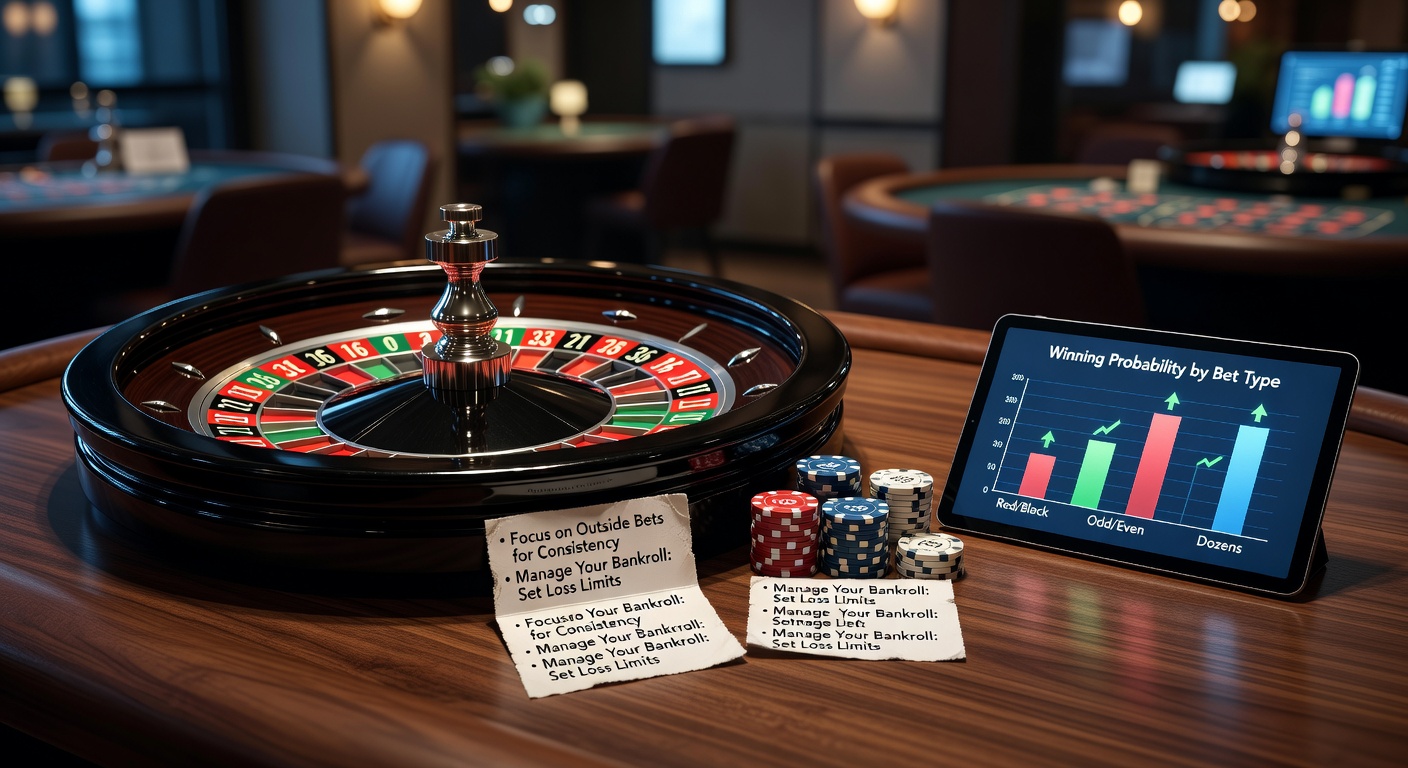
Outside bets such as red-black, odd-even, and high-low offer nearly even-money payouts with slightly lower volatility than inside number selections. These wagers allow longer play periods within a fixed bankroll, although the house edge remains identical to other straight-up or split bets on the same wheel. Data compiled by Canadian gaming regulators shows consistent player preference for these lower-volatility options during longer sessions, particularly when combined with modest progression systems.
Conclusion
Available evidence continues to demonstrate that roulette outcomes depend on independent random events governed by fixed probabilities, and no betting system modifies those probabilities. Players who focus on wheel selection, session structure, and predefined limits operate within the mathematical framework that governs the game. Reports issued through mid-2026 reflect ongoing interest in these established approaches across both online and land-based environments, while regulatory emphasis remains on transparency of game mechanics rather than promotion of any particular strategy.